
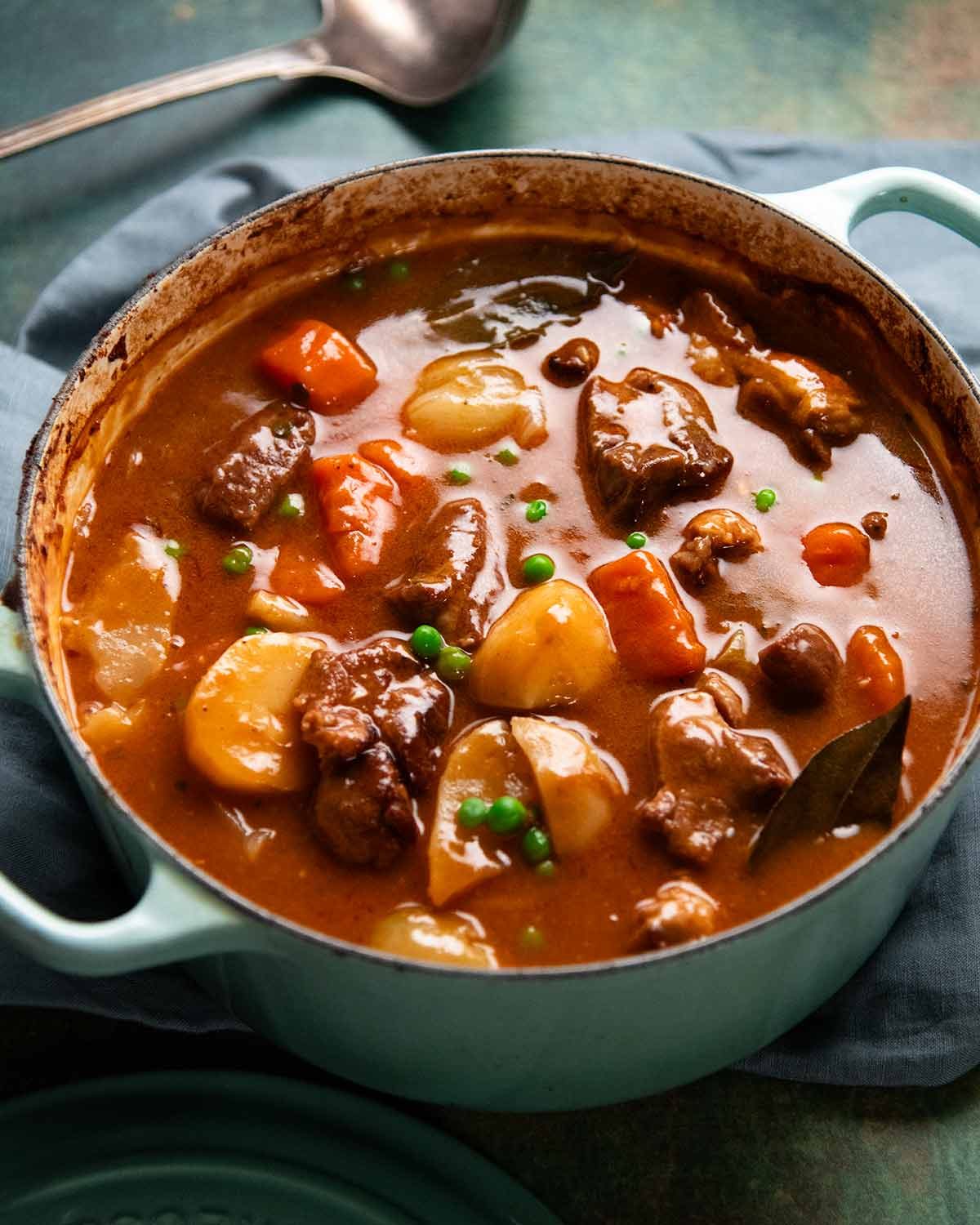
Lamb Navarin – Navarin d’agneau – is one of the great classic French stews (ragoûts). Lamb is slowly braised until meltingly soft in a rich sauce with potatoes and vegetables to soak up all that flavour. If you’ve never made a French stew before, this is a good one to start with as it is easier to make than Coq au Vin and Bourguignon.
Nagi's Notes


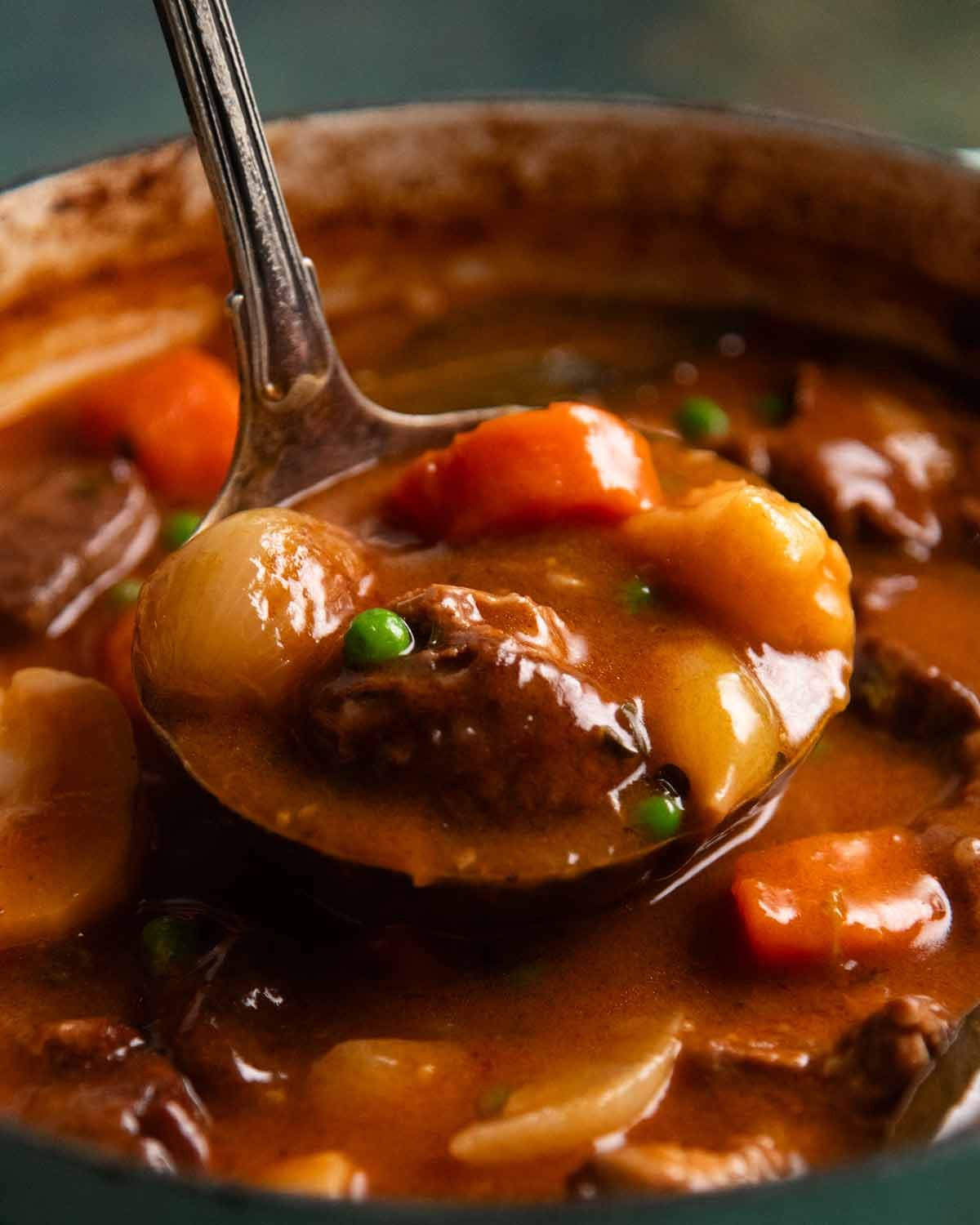
You know what I really love about this? The sauce. It’s different. Sometimes stew sauces can taste a bit same-same. Tasty, but familiar. But this Navarin! The lamb gives the broth a richer flavour than using other proteins, and all those vegetables add flavour into the sauce as they cook slowly until they’re so soft, they melt in your mouth. It’s hearty, but not heavy and I love it. I think you will too!
PS I also love that I don’t have to make a mash, this has everything you need for a complete meal!

Lamb Navarin
Lamb Navarin is the most well known lamb stew in France. I have clear memories of my young self learning how to cook it at culinary school, then making it for my parents at home.
Traditionally, it was cooked in spring using the first young vegetables of the season. Nowadays, it’s also cooked all year round, simply using seasonal vegetables instead. But one vegetable that is always expected to be in it is turnips. In fact, the name Navarin comes from the French word navet, meaning turnip.
So along with the lamb, they’re an important part of the dish, but if you can’t find them, swede (rutabaga) or even more potatoes are excellent substitutes.
Ingredients
Here is what you need to make Lamb Navarin.
BEST LAMB FOR NAVARIN
Lamb shoulder is the best cut for this recipe. It’s a tougher cut that’s made for slow cooking, with plenty of marbling that keeps the meat really juicy as it cooks. I always use it for Navarin and other lamb stews and wouldn’t swap it for anything else. Luckily, it’s widely available these days.
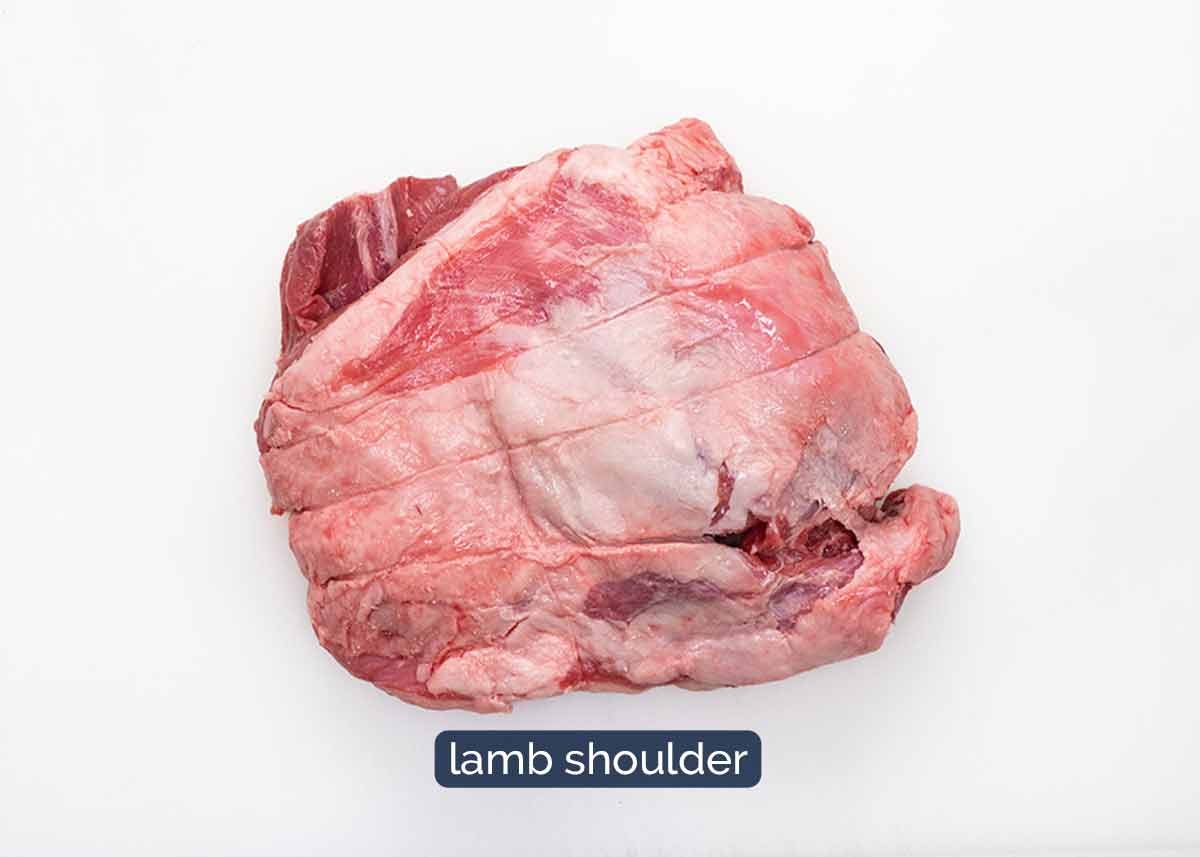
Avoid buying pre-cut lamb pieces. They’re usually cut too small, so they’ll be ready before the sauce has had time to develop its full flavour. It’s much better to buy a whole piece of lamb shoulder and cut it yourself into large chunks! I also wouldn’t recommend using lamb leg or other lean cuts. They are not fatty enough and tend to dry out during the long, slow cook.
VEGETABLES FOR NAVARIN
These are the vegetables in this classic winter version of Navarin. However in France, this is made with seasonal vegetables year round. For example in spring, people use vegetables like asparagus, dutch carrots, fava beans, and baby turnips.
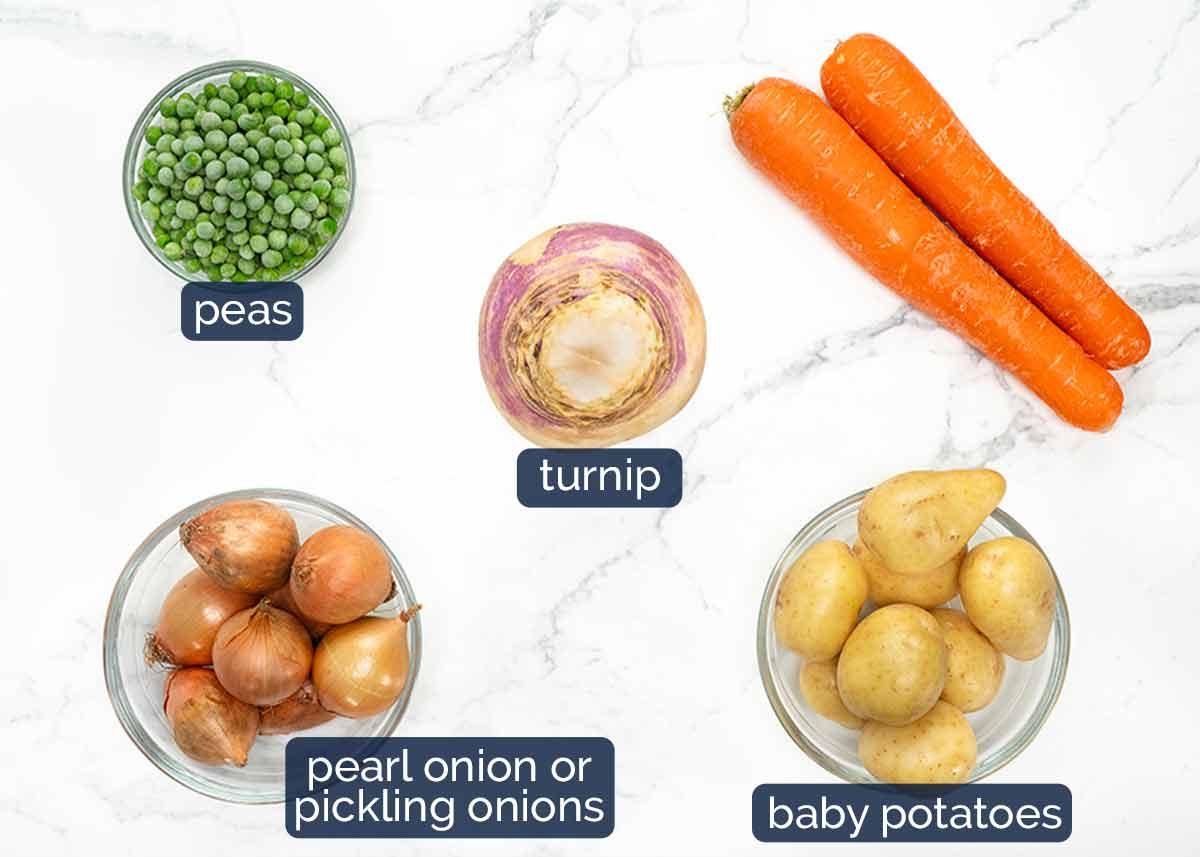
Turnips – A root vegetable with crisp white flesh and a mildly peppery flavour when raw. As they slowly cook, they become beautifully tender, sweeter and much more mellow, soaking up all the flavours of the stew. Turnips are one of the classic ingredients for this recipe but if you can’t find them, swede (rutabaga) or even more potatoes are excellent substitutes.
Baby potatoes / new potatoes – The waxy kind so they hold their shape during the slow cook. They’ll soak up the rich sauce without falling apart. Choose ones that are the same size if you can, so they cook through in the same time.
Pearl onions, or pickling onions – Pearl onions are the tiny onions that are a classic ingredient in French stews, but it can be hard to put your hands on them here in Australia. Pickling onions are the ideal substitute which are widely available. They’re usually slightly larger, so just peel away an extra layer or two until they’re about 2.5 cm / 1 inch in diameter. Soak them in cold water for 10–15 minutes to soften the skins, this will help with the peeling.
If you can’t find either, use 2 regular brown or yellow onions instead. Halve them, then cut each half into 1 cm / 2/5-inch wedges.
Carrots – Everyday standard carrots will work here.
Frozen Peas – Just regular frozen peas or baby peas. You don’t have to thaw or pre-cook. Frozen peas are cooked already, they just need to be heated.
AND EVERYTHING ELSE FOR NAVARIN
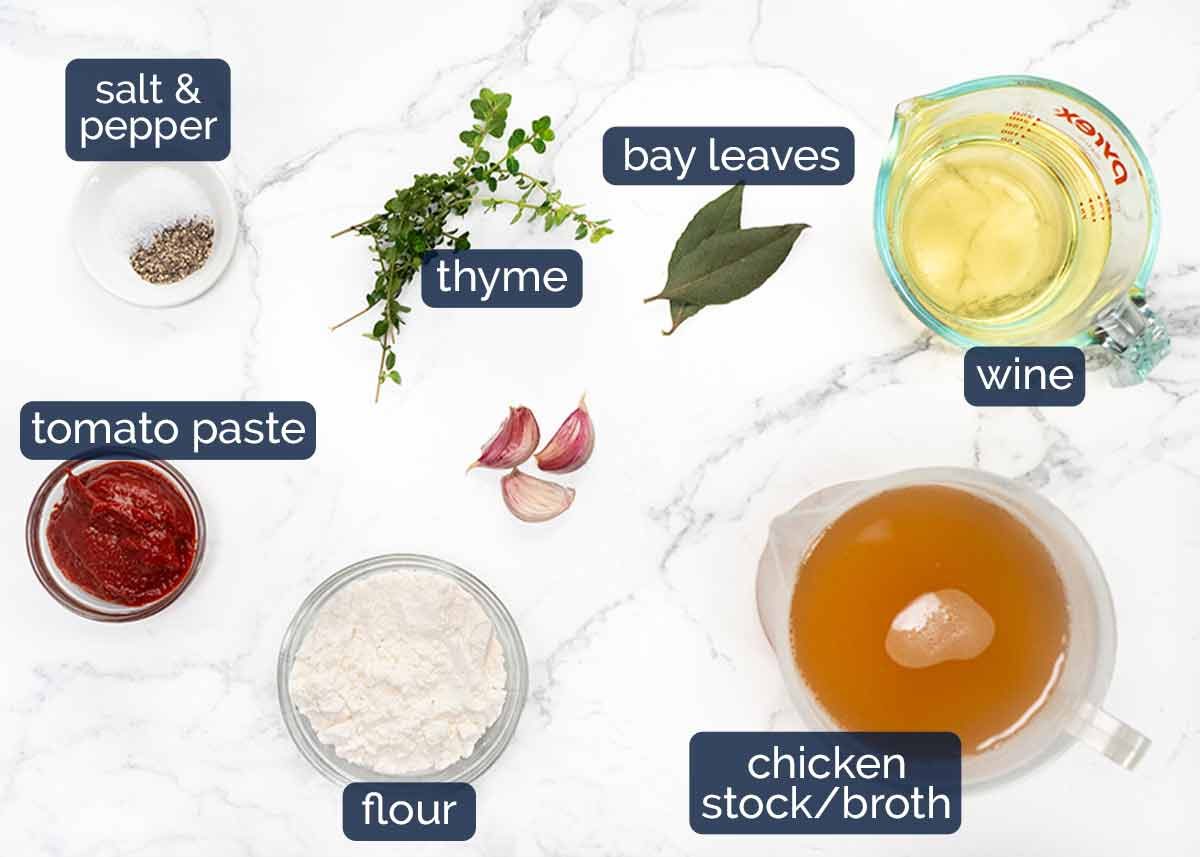
Garlic – Base aromatic flavour. Small thing but goes a long way.
Tomato paste – Adds body to the dish because of its concentration of flavour. Important ingredient to the sauce’s colour and balance.
Plain flour (all purpose) – For thickening the sauce.
White wine – You probably noticed by now, chardonnay is my favourite wine in the kitchen because of the flavours it add to dishes and it’s the one that I used the most during my restaurant days. We use it for deglazing here. There is no need to use an expensive wine, the flavour and aroma are largely lost during cooking. Substitute with low-sodium chicken stock for a non-alcoholic version.
Chicken stock – The best choice of stock here. It adds savouriness to the sauce without masking the flavour of the lamb, and after the long, slow cook, it certainly doesn’t taste “chickeny”. If you have homemade chicken stock, even better, it’ll take the sauce to another level and make your Lamb Navarin restaurant-quality.
I don’t recommend using powdered chicken stock, it wouldn’t do justice to a dish like this.
Thyme and bay leaves – Classic herb aromatics that you’ll find in many French recipes.
Salt – Used to season the lamb before browning and inside the stew. If you’ve only got table salt, halve the amount. For salt flakes, increase by 50%.
Black pepper – Cracked black pepper, the one we always use.
How to make Lamb Navarin
Classic slow-cooked oven method is used here. First, the lamb is well browned to build flavour, then the sauce is started by cooking the vegetables before adding wine, stock and herbs. After an hour in the oven, the vegetables are added and the stew is returned to gently braise until everything is beautifully tender.
1. MAKING THE STEW
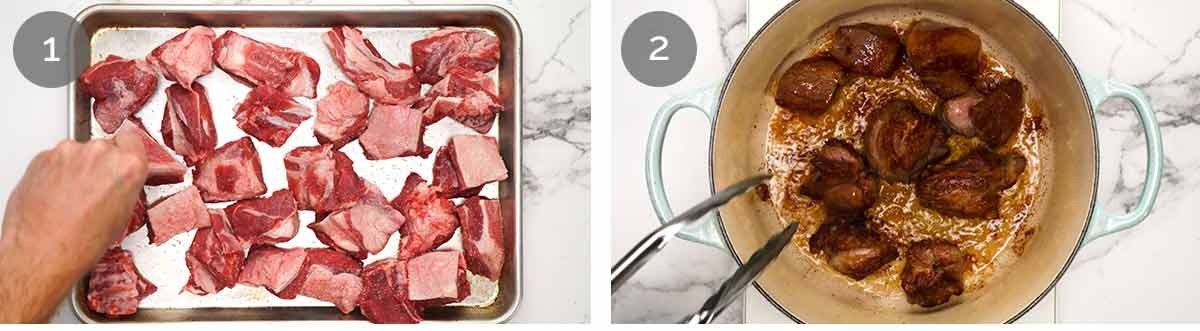
Pat the lamb dry and season with salt.
Sear the lamb – Heat the oil in a heavy-based, oven-proof pot over high heat (mine is 24cm / 9.5″). Add 1/3 lamb and brown it well until deeply coloured all over (about 3 minutes). Remove, then repeat with remaining lamb. There will brown bits on the bottom of the pot and that’s where much of the flavour for the sauce comes from.
Once the lamb is browned, there’s no need to add any more oil. The lamb will have released plenty of its own fat, which is perfect for cooking the vegetables and building the flavour of the stew.
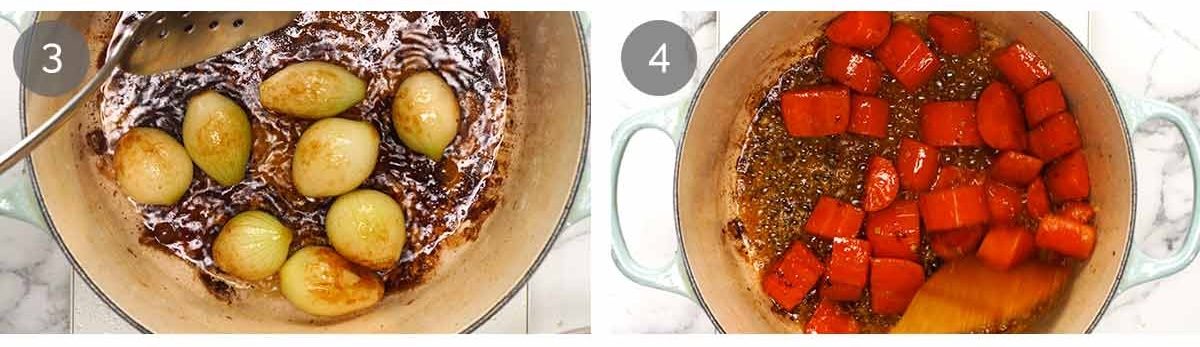
Onions – Turn the heat down to medium high and add the onions and cook until you get some nice golden patches, then set them aside in a separate bowl because these get added back into the stew partway through the slow cooking phase.
Carrot and garlic next – Add the carrots into the pot and stir for 2 minutes, then add the garlic and quickly cook for 20 seconds.
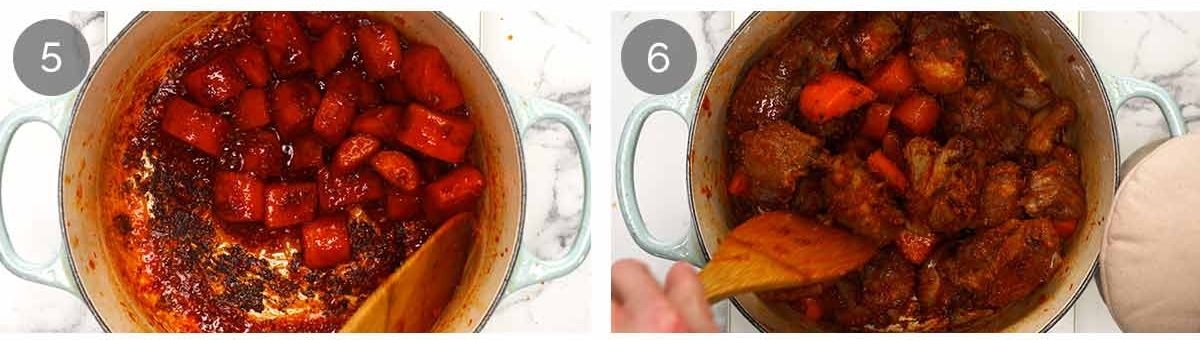
Add the tomato paste and stirring constantly, cook it for a minute. It removes the raw flavour, brings out its natural sweetness as well as adding its deep colour into the sauce.
Return the lamb to the pot with any juices collected on the tray. Stir in the flour and cook for one minute.
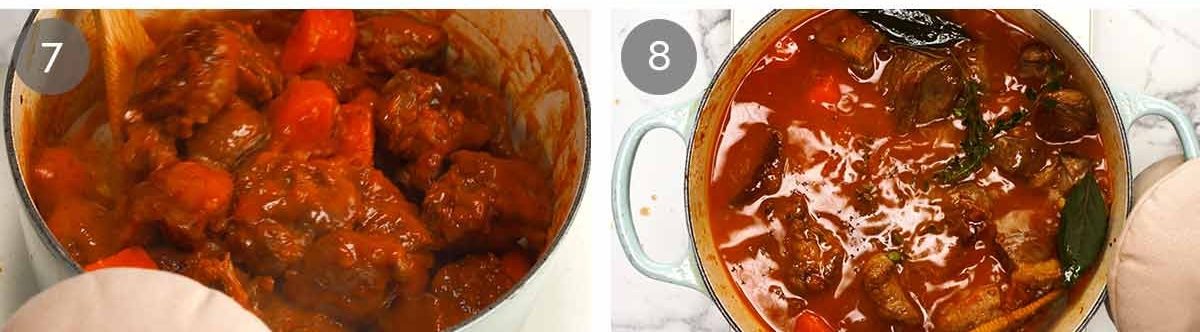
Pour the wine in then stir until the lamb is coated in a pale red, loose paste. At this point, the flour should be completely dissolved with no dry patches or lumps remaining before adding the stock.
Add the chicken stock, thyme, bay leaves, salt and pepper. Stir well until everything is combined. Now let the oven take over, the hard work is over. 😊
2. SLOW COOKING

First slow cook – Bring everything to a simmer. Cover the pot and transfer it to the oven at 180°C / 350°F (160°C fan) for one hour. This gives the lamb a head start so it can begin to soften before adding the vegetables.
I prefer using the oven for slow cooked stews because everything cooks evenly and there’s no need to stir. If you don’t have an oven, you can slow cook on very low heat on the stove and be prepared to stir regularly and very carefully so the vegetables and lamb doesn’t break.
Add vegetables – Stir in the potatoes, turnips and onion, pushing them into the sauce as best you can. Don’t worry if a few pieces are still peeking above the surface, they’ll cook perfectly once the lid is back on.
This version uses sturdy vegetables that can handle the long braise. When this is made using delicate spring vegetables like asparagus and dutch carrots, they are cooked separately then stirred in towards the end as they are far too delicate to slow cook.
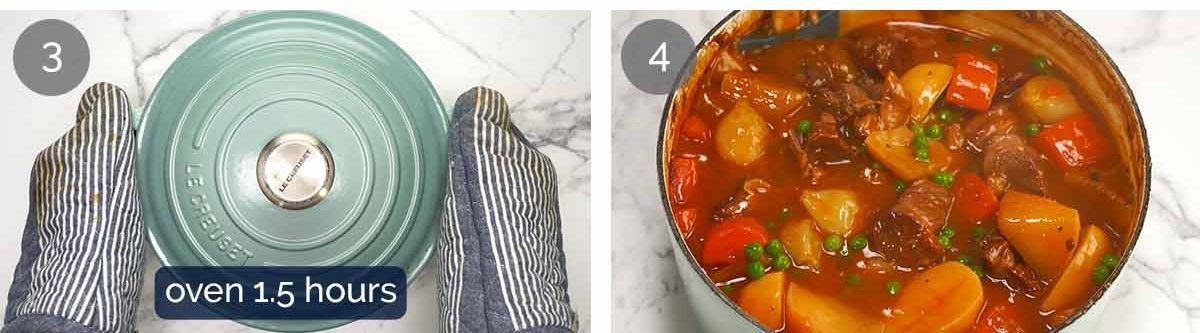
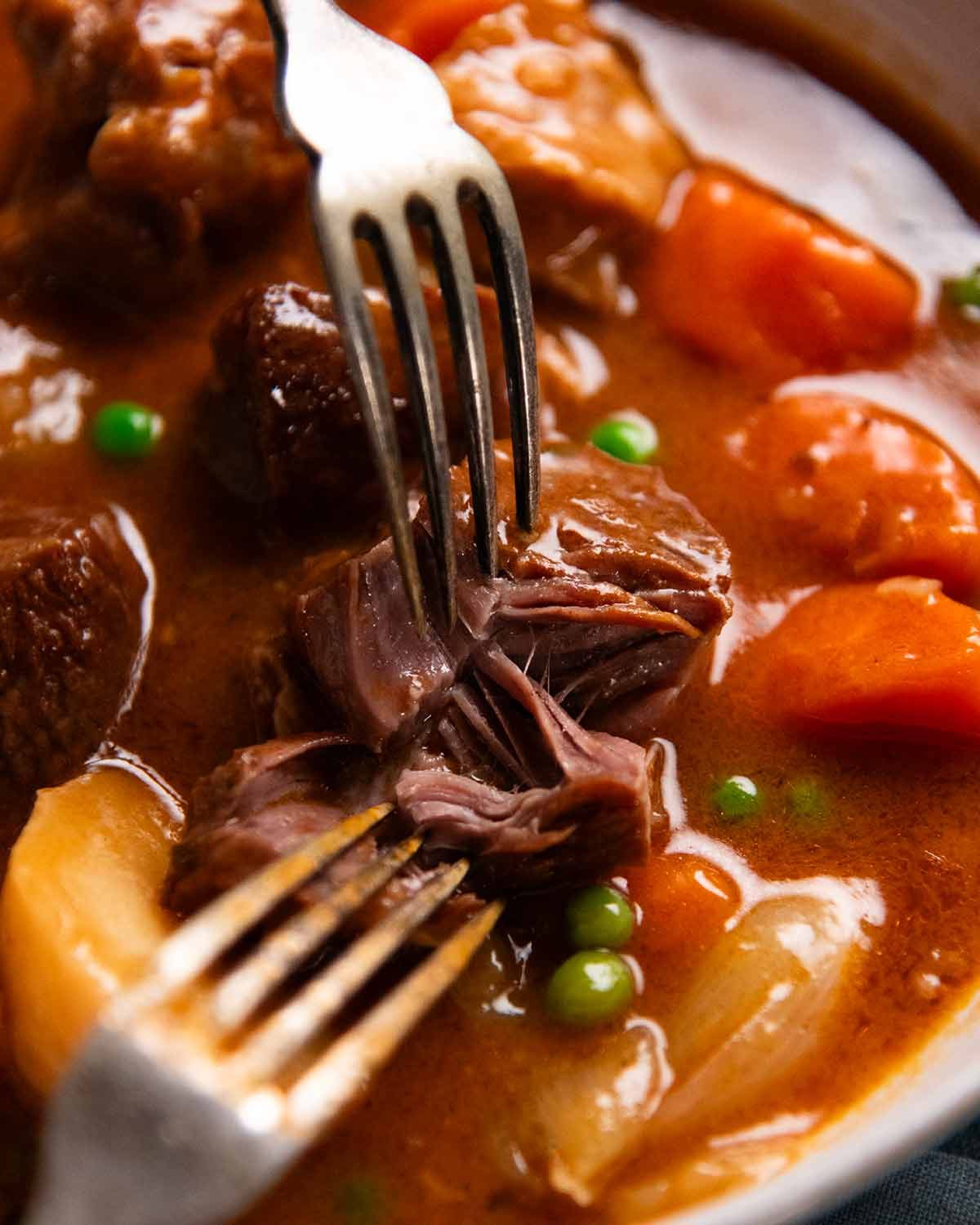
Slow cook part 2 – Cover and return the pot to the oven for another 1 1/2 hours. During this final braise, the lamb becomes beautifully fall-apart tender while the vegetables gently soften until they’re buttery and infused with all the flavours of the sauce.
Finish – Gently stir in frozen peas right at the end using a rubber spatula, then cover the pot for a couple of minutes so they warm through while keeping their bright colour. Taste the sauce and adjust the salt if needed before serving. Enjoy!
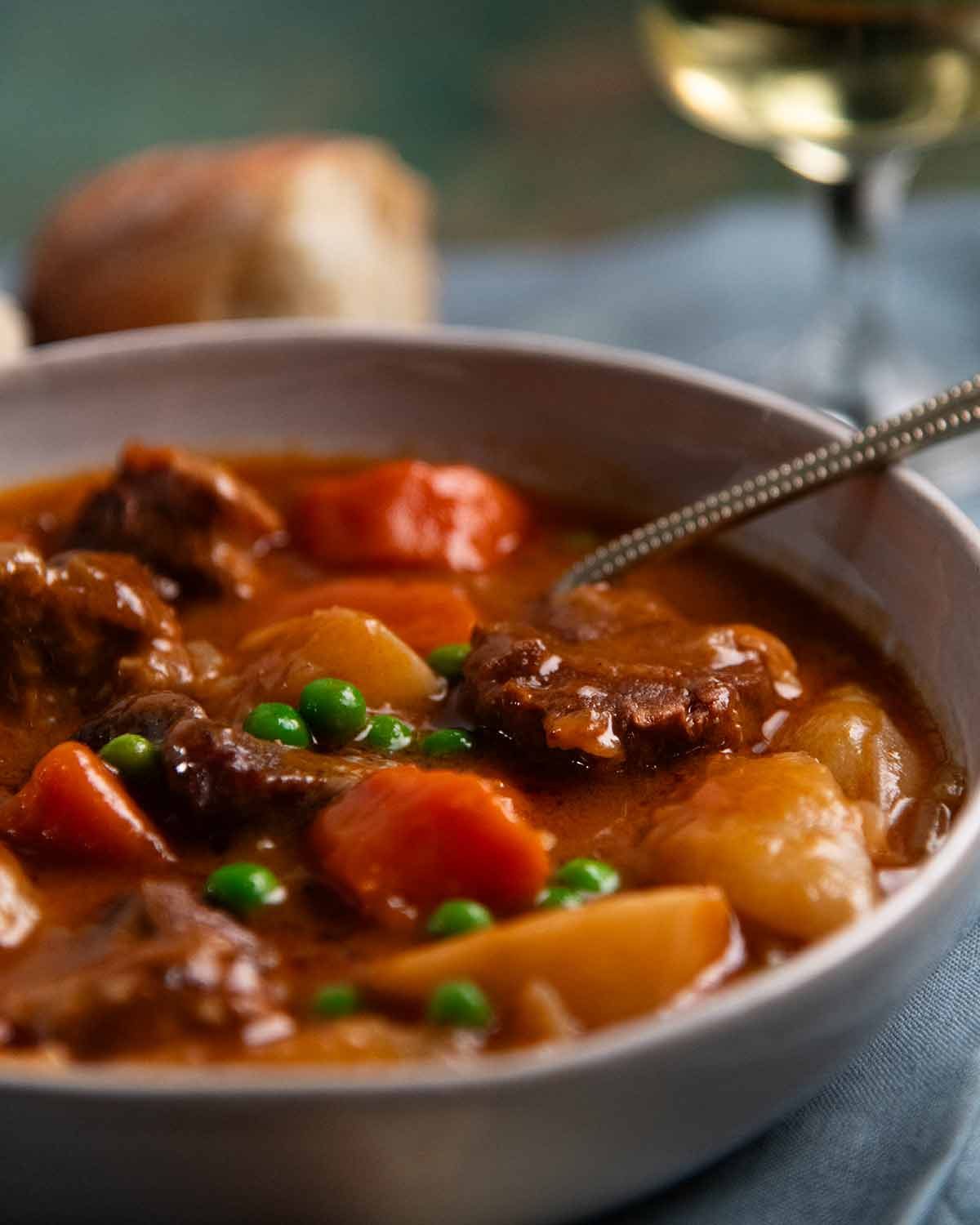
How to serve Lamb Navarin
Lamb Navarin is the kind of meal that makes everyone happy around the table. Rich, comforting and full of flavour, it’s a complete meal in itself but the truth is, it’s even better shared with a loaf of warm, crusty bread for mopping up the beautiful sauce. For me, it’s a must!
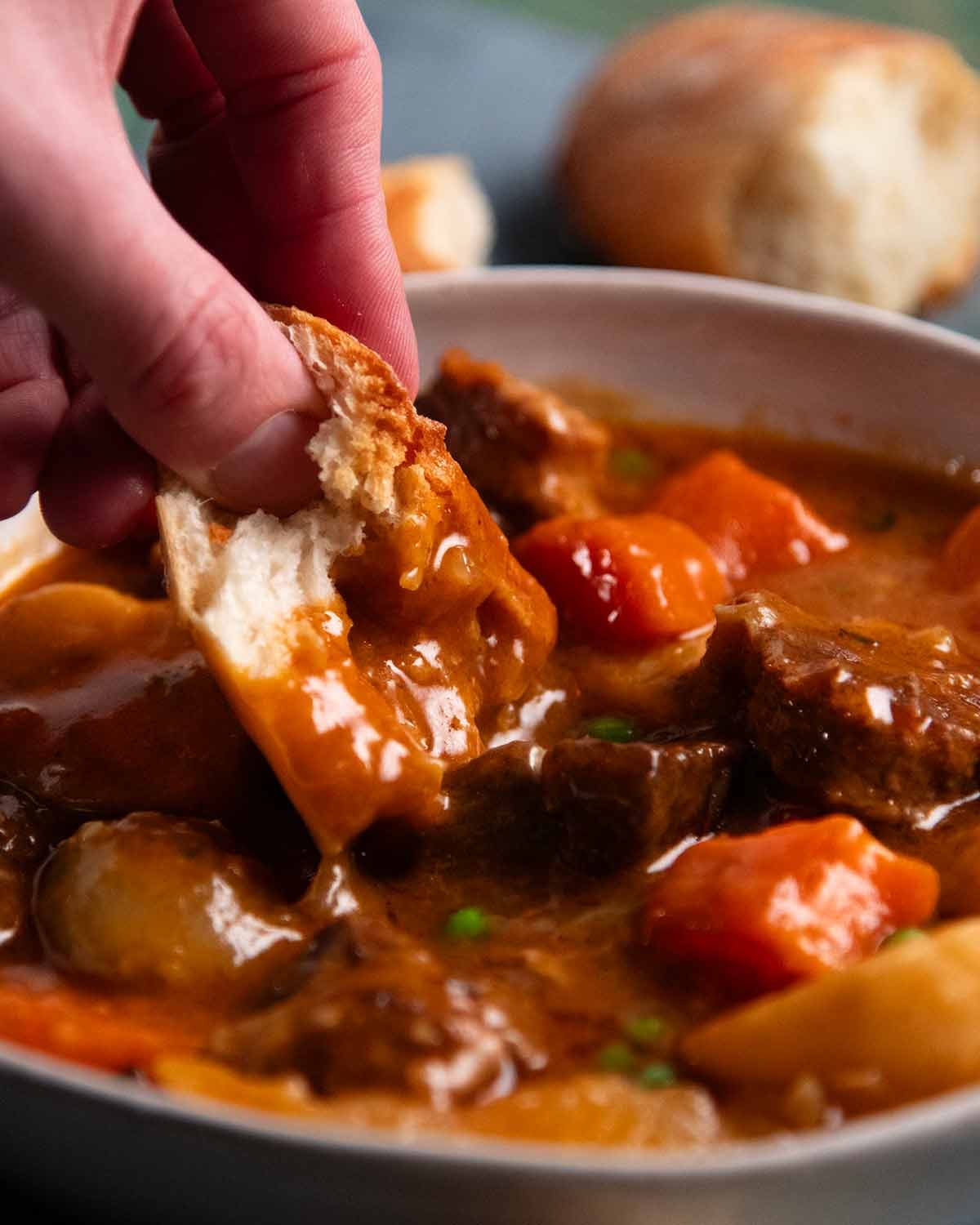
And if you want to make it even more substantial, serve it over steamed rice with a simple bistro salad. That’s how I sometimes enjoy it too. I am really curious to read your feedback if you happen to make it! Bon appétit! – JB
FAQ – Lamb Navarin
Lamb shoulder is my choice and the only cut I recommend here. It’s made for slow cooking and stays beautifully juicy. Avoid buying pre-cut lamb pieces. They’re usually too small and will become tender before the sauce has had time to fully develop its flavour and I don’t recommend lamb leg or other lean cuts as they tend to dry out.
Yes. Simply replace the plain flour with a good gluten-free plain flour blend. The flour is only there to lightly thicken the sauce, so the recipe works just as well.
Yes. Replace the wine with the same amount of non-alcohol wine. Or more low-sodium chicken stock. You’ll lose a little depth of flavour, but it will still be delicious.
Swede (rutabaga) is the best substitute. It has a slightly sweeter flavour and firmer texture, but becomes beautifully tender during the long cook. Or you can just add extras potatoes!
Absolutely! Like most stews, Lamb Navarin is even better the next day after the flavours have had time to mingle together. Cool, refrigerate overnight, then gently reheat over a low heat before serving.
Yes. Let it cool completely, then freeze for up to 3 months. Thaw overnight in the fridge and gently reheat on the stove. If the sauce has thickened, simply add a splash of water or stock to loosen it.
Watch How To Make It
Hungry for more? Subscribe to my newsletter and follow along on Facebook, Pinterest and Instagram for all of the latest updates.

Lamb Navarin
Ingredients
BROWNING LAMB:
- 1.25kg / 2.75lbs boneless lamb shoulder , excess fat trimmed, cut into 5cm / 2" pieces (Note 1)
- 1 3/4 tsp cooking / kosher salt , (or half for table salt, +50% for flakes)
- 2 tbsp vegetable oil or other plain oil
STEW:
- 8 (500g/1lb) baby potatoes , peeled and cut in half
- 1 large turnip (~350g/12oz), peeled, cut into 8 wedges then cut each wedge in half (Note 4)
- 8 pearl onions or small round pickling onions , peeled (Note 5)
- 2 large carrots (~200g/7oz each), peeled, cut in half lengthways then into 2cm / 0.8" pieces
- 3 garlic cloves , finely minced
- 3 tbsp tomato paste
- 1/3 cup plain flour / all-purpose flour
- 1 cup chardonnay or any other dry white wine (Note 2)
- 1 litre (4 cups) chicken stock /broth (low sodium) (Note 3)
- 1 tsp cooking / kosher salt , (or half for table salt, +50% for flakes)
- 1 tsp black pepper
- 3 sprigs thyme , fresh (sub: 1/2 tsp dried)
- 2 bay leaves , fresh (sub: dried)
- 1 cup frozen peas
For serving
- Warm crusty bread
Instructions
ABBREVIATED RECIPE:
- Season lamb. Brown in batches, remove. Brown onions, remove. Cook carrots 2 minutes, then garlic. Stir in tomato paste, 1 minute. Return lamb. Stir in flour, 1 minute. Add wine, then stock. Stir in salt, pepper, thyme and bay leaves.
- Bring to a simmer. Cover and bake at 180°C/350°F (160°C fan) for 1 hour. Stir in potatoes, turnips and onions. Cover and bake 1 1/2 hours. Stir in peas. Taste and add more salt if needed.
FULL RECIPE:
- Preheat oven to 180°C/350°F (160°C fan).
- Season lamb – Spread lamb out onto a tray. Pat dry with paper towels then sprinkle with salt.
- Brown lamb – Heat the oil in a large, heavy-based, oven-proof pot over high heat (mine is 24cm / 9.5"). Add 1/3 lamb and brown aggressively all over (about 3 minutes). Remove into tray, then repeat with remaining lamb.
- Brown onions – Turn the heat down to medium high and add the onions. Cook for 2 minutes stirring regularly until brown all over. Remove into a bowl.
- Sauté carrots & garlic – Add the carrot and cook for 2 minutes stirring regularly until it starts to soften. Add garlic and cook for 20 seconds.
- Tomato paste and lamb – Add tomato paste and cook for 1 minute stirring constantly. Add the lamb back in the pot including any juices that are on the tray. Stir to combine.
- Flour – Stir in the flour and cook for 1 minute.
- Add wine and stock – Pour the wine, stir until the lamb is coated in a pale red, loose paste then add the stock and stir gently until combined.
- Seasoning – Add salt, pepper, thyme and bay leaves and stir well.
SLOW-COOK:
- Oven 1 hour – Bring to a simmer, then cover and transfer to oven for 1 hour. (See note 6 for other cook methods)
- Potato, turnip & onions – Remove from the oven, stir in potato, turnip and onions. Submerge ingredients as best as you can, if some of the vegetables or meat are still peeking above the sauce, that's perfectly fine.
- Oven 1 1/2 hours – Cover with lid and return to the oven for 1 1/2 hours, or until the lamb is “fall-apart tender”.
- Peas – Add the frozen peas, stir VERY gently using a rubber spatula, cover and leave it for 2 minutes.
- Adjust salt – Remove from oven, taste sauce and add salt if needed. (Note 6)
- Leave overnight (optional) – If time permits, leave the stew overnight before serving. Like all good stews, the flavours only get better the next day. Reheat it gently over a low heat before serving.
- Serve – Serve hot with some warm crusty bread to soak up all that beautiful sauce! Enjoy! 😊
Recipe Notes:
Nutrition Information:
Life of Jaffle
Jaffle is still learning what goes on behind the scenes during our recipe shoots. Every new recipe is another chance to introduce him to the environment, the food we cook and all the excitement that comes with it. He was very curious about this Lamb Navarin and seemed quite impressed by the smell and he definitely wanted to know what was in the pot! Our future official taste tester is almost ready!

Yum
This was delicious and the whole family enjoyed it. Even those that usually screw their noses up to a stew
Thanks
Great feedback! Thank you Nicole 🙂
I cooked this dish this afternoon for dinner tonight! Devine! Thanks chef JB! Will certainly make it again!
Thank you very much Kim!
Brilliant, easy, perfect. Woolworths sells deboned lamb shoulder that worked perfectly for this recipe. Easy to follow and simple ingredients. I couldn’t find the turnip, so used a Swede instead, and it was a great substitute. Thanks again JB
Thanks Dani, great feedback!
I made the Lamb Narvarin. It tasted biter. I used Lego Tomato paste maybe I should have added some sugar. I was bit bitter and rich for my liking it needed something more than the bread to break it up.
Hi Julie, I’m so sorry it wasn’t to your taste. A bitter flavour isn’t something I experienced during testing. I don’t think the Leggo’s tomato paste needed sugar, but bitterness can sometimes come from cooking the tomato paste too long or reducing the wine too much. Thanks so much for giving it a try and for your feedback.
Love this….in our family we call it the lamb that never ran in lieu of lamb navarin…..always good comfort food …. I use Dutch carrots and omit the peas…and add plenty of chat potatoes mmmmm
Love the joke Cathy! Thanks for cooking it 🙂
It surely isn’t a coincidence that navarin is an anagram for nirvana, because I made this today and it was absolutely divine. Thank you JB!!
Thank you Bee, haha I never thought of it! I should add it to the post 🙂
I made this during the week. I’m not the best of cooks and my husband is a great cook. Hence he is the cook in the house. However a shoulder reconstruction has meant I needed to step up. This was easy, although I have no idea how to debone a shoulder. Hubby suggested a boneless rolled shoulder. I cut that up and it was delicious. Big tick of approval from hubby and plenty left over for another two meals each with crusty bread. Will be making again.
Thanks Katrina, the fact that you will be making it again is the best feedback and good on you for stepping up in the kitchen!
Oh my goodness JB, this was incredible! So much flavour and the colour of the stew is lovely. I have 2 large two person serves put away in the freezer to get us through the up coming newborn stage and will try to make it again this week so I have even more on hand. Between you and Nagi I have an entire chest freezer stocked and ready. Thank you for this recipe, it’s a new favourite
Thank you Chels, I’m glad you loved it. If your whole chest freezer is packed, you are definitely ready for the big change! Congratulations! 🙂
I love the lamb navarin
Thanks Russell!!
What a great recipe, and so flavoursome.
We had it the normal way, then in pies, and a third serve with rice.
Loved it, thank you Chef.
Thanks Warren! How were the pies? That sounds delicious 🙂
This is epically delicious. I used 6 lamb forequarter chops. Think I might make JB’s Apple Cake to have for dessert as well.
Thank you Wendy!! I really appreciate your feedback. So how was the apple cake!!?? 🙂
The Apple Cake lasts about 5 minutes in this house!! I’ve made it quite a few times and it’s awesome
Loved this recipe
Will be my go to casserole from now on
So good to know you liked it, thanks Elizabeth!
Amazing, another winner and so full of flavor! Thanks Nagi.
Thanks Marika! Really appreciate the feedback!
Can you use parsnip instead of turnip or swede? If so, how much?
Thank you
Hi Denise, yes you can. Use about the same weight (350g/12oz), probaly around 2 pieces.
Great flavour and such an easy dish. Just need to plan for it so as to do it the day before.
Thanks Ruth for making the Navarin, so happy you loved it!
My dear mum cooked this recipe many years ago so I was interested to try it again. I compared recipes and there was not that much difference. Yours was delicious- the sauce had perfect balance and the meat melted in our mouths. Thanks JB.
Thanks Linday, I’m glad I was able to match your mom’s recipe. Can’t ask for a better review 🙂
Made Lamb Navarin today to celebrate Bastille Day. It was supposed to be dinner but it smelt so good, we had to eat it real early 🤣. Tasted divine. Thanks so much for sharing JB. Jaffle looks gorgeous!
When you can’t wait and dinner ends being almost a second lunch, you know it’s good! Thank you Helen 🙂
Yum yum yum!
Thanks thanks thanks!!!
Fantastic. Made this yesterday and had it for dinner tonight. Really tasty and full of flavour. I couldn’t work out what was so tasty… must be the combination??? Thanks JB! I couldn’t find a boned shoulder, so googled how to do it myself … that was a bit tricky as a first attempt … no turnips available, so subbed in Swede. 10/10 thank you
Hi Wayne, great job on deboning the shoulder yourself! That’s hard work, especially the first time! Thank you for the feedback.
Cooked this on Saturday night! It was delicious. I did make two small mistakes but it was still delicious and I was able to fix one with the leftovers for dinner tonight. The first mistake I didn’t read all the notes and bought diced lamb shoulder from the great Halal butcher near us, luckily they were quite generously cut pieces. I also forgot to add them pease at the end. No matter I added half a cup to today’s leftovers and it was still fabulous! I will definitely buy the meat from the same butcher again and put the peas in next time be fore we eat it. I served it with freshly baked cheese scones. Thanks Jb! Tomorrow it’s Tuscan chicken stew! Love being retired and having time to cook! Thanks for all your recipes Nagi, my vet loves you chocolate brownies too!
Thank you Philippa for your kind comment. It’s nice to see that you enjoy cooking as much as we do and thank you for cooking our recipes!